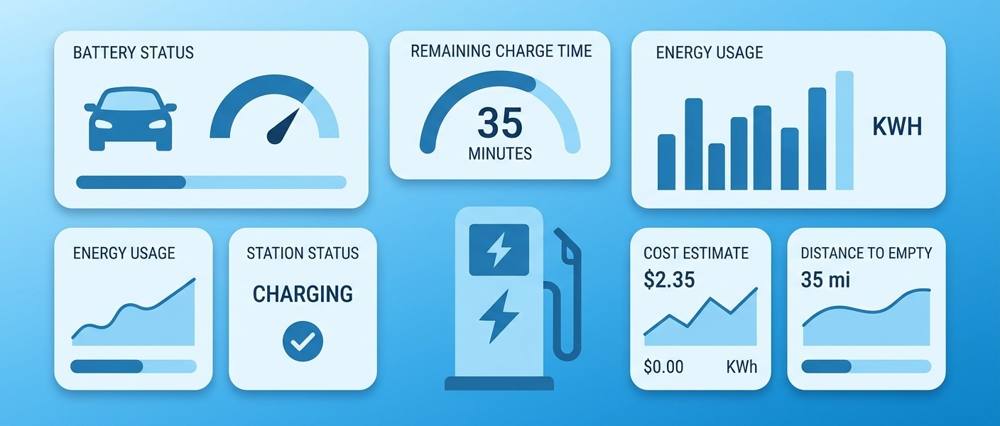
The Atlas CMS lets operators manage every charger brand from one dashboard, with accurate live status.
Remote monitoring, diagnostics, session records and remote start, stop, reset and unlock.
OCPP 1.6J first, with 2.0.1 to follow. A charger model is only marked compatible after testing on a real device.
Set a site limit, see live load against it and apply simple load limiting where chargers support it.
Per-kWh tariffs, session costs and CSV exports for invoicing.
Tenant-isolated data, role-based access, audit logs and encryption.
OCPI roaming, public APIs, payment and energy integrations, once partners need them.
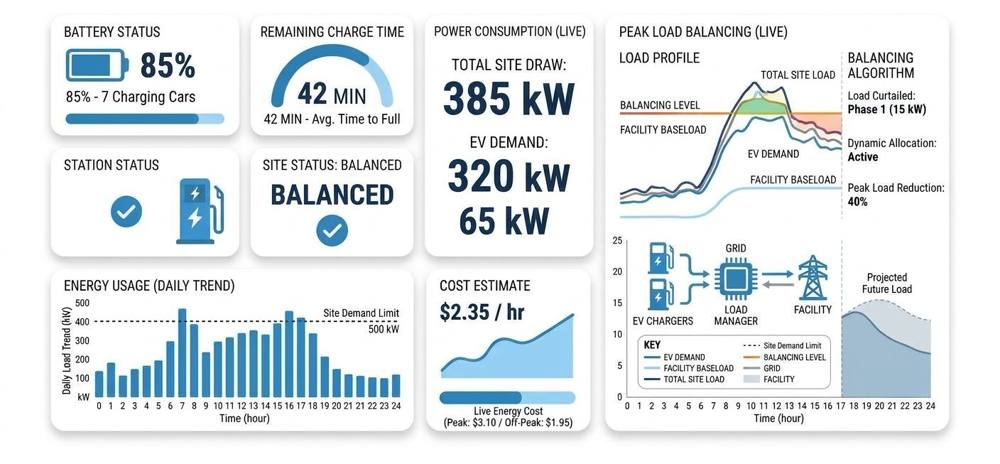
Operators see live load against the site limit, get warned as it approaches, and can share power across chargers that support OCPP charging profiles. Load is estimated from charger data. Direct site metering is planned for a later phase.


The dashboard puts charger status first: online, charging, faulted and offline, with alerts and a clear audit trail of remote commands.
Screens shown are static design previews, not a live product.
| Layer | Function | Status |
|---|---|---|
| Connectivity | OCPP links the platform to charger hardware from different brands. | MVP |
| Core platform | Cloud, multi-tenant architecture, role-based access and security. | MVP |
| Charging and capacity | Sessions, monitoring, diagnostics and capacity management. | MVP |
| Fleet workspace | A basic FleetVolt OS connects vehicles and depot chargers. | MVP |
| Interoperability | OCPI, APIs, payment and energy integrations. | Planned |
| Analytics and AI | Reporting, energy intelligence and operational insight. | Planned |
We are looking for operators and fleets to pilot the platform.
Get in touchPartner with us